

B.C.’s Tough Impaired Laws: One Year, 45 Lives Saved
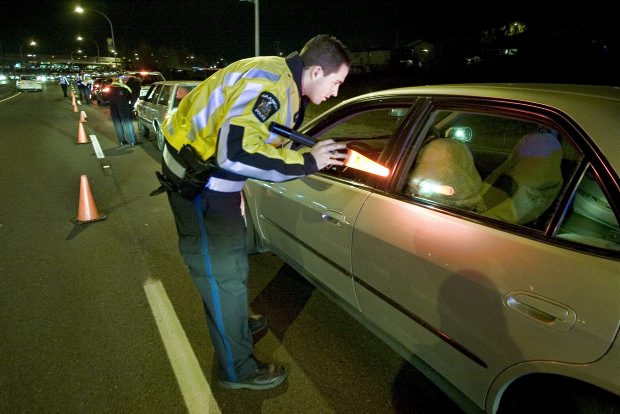 Victoria, B.C.’s first year with Canada’s toughest roadside penalties for impaired driving saw alcohol-related motor vehicle deaths reduced by 40 per cent, Premier Christy Clark announced today, the National Day of Remembrance for Road Crash Victims in Canada.
In addition, the Province will contribute $40,000 this year toward establishing Alexa’s Bus, a mobile road safety bus that will focus on impaired driving education and enforcement.
“In honour of Alexa Middelaer, a four-year-old girl whose life was cut short by impaired driving, we set a goal to reduce impaired driving fatalities by 35 per cent by the end of 2013,” said Premier Clark. “Just one year later, preliminary data shows we are already exceeding that with a 40 per cent reduction. That’s 45 more families in B.C. who have been able to keep a loved one safe from impaired drivers.”
From Oct. 1, 2010, to Sept. 30, 2011, the total number of alcohol-related motor vehicle deaths across B.C. was 68. This represents a decrease of 40 per cent from the 113 such deaths on average in each of the previous five years.
“For the first time in a decade, we’ve seen a real drop in the deaths associated with impaired driving, and 45 more people made it home safe in the past year as a result,” said Minister of Public Safety and Solicitor General Shirley Bond. “Together with public education, prevention programs and criminal sanctions, the roadside penalties will continue to play a role in helping to ensure the success seen over the past year becomes a life-saving trend over the longer term.”
B.C. police agencies have backed up the deterrent and life-saving value of the new penalties with strong enforcement. Between Sept. 20, 2010, when the new sanctions came into effect, and Sept. 30, 2011:
· Police across B.C. report having served 23,366 immediate roadside prohibitions to drinking drivers.
- Of these, 15,401 were to drivers who blew in the “fail” range (i.e., with a blood alcohol content level of 0.08 per cent or over) or refused to provide a breath sample
- 7,965 were to drivers who blew in the “warn” range (i.e., provided a breath sample between 0.05 and 0.08 per cent).
· Police impounded 20,020 drinking-drivers’ vehicles at the roadside.
- In 14,951 cases, drivers received a 30-day impound for a “fail”.
- Of the other 5,069 impounds for a “warn”, 98 per cent were three-day impounds for drivers caught a first time under the new rules. (Vehicle impoundment is at the discretion of police on the first or second occasion that a driver blows in the “warn” range.)
“The B.C. Association of Chiefs of Police strongly supported the new law, and recognized that enforcement would be critical to help build awareness, change drinking and driving habits, reduce injuries and collisions, and ultimately, save lives,” said Chief Supt. Bill Dingwall, president of the association. “The first-year success is a reflection of a significant change in public attitude towards drinking and driving, with enforcement and immediate sanctions reinforcing this remarkable change.”
Alexa’s Bus, a vision of her parents Laurel and Michael, has quickly drawn contributions from an array of governments, organizations and private donors – including $50,000 from BCAA, $15,000 from MADD Canada, $40,000 from ICBC and $10,000 from the City of Surrey. Similar buses already exist in Alberta, Ontario and Washington State.
The Motor Vehicle Act changes that came into force Sept. 20, 2010, mean drivers impaired by alcohol face immediate penalties that may take away their vehicle, their licence, and cost them anywhere from $600 to about $4,060 in administrative penalties and remedial program costs.
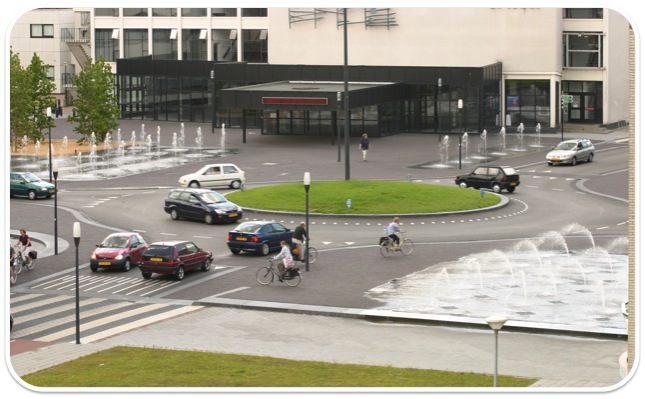 For most conscientious drivers, the rules of the road are like divine commandments: to be followed unquestioningly, as if passed down for all time from Mount Sinai on a graven tablet. Because they’re meant to preserve our safety, most of us willingly submit to them, giving up the freedom to drive however we please in the interest of the common good. This is the social contract all drivers enter into freely when they get behind the wheel. But the authority of the rules of the road is also reinforced in all sorts of ways, from stern warnings, speeding tickets, aggrieved honks, and demerit points to an elaborate infrastructure of traffic lights, street signs, road markings, speed bumps, and other mechanisms of control that are essential to rationalizing the flow of traffic and preventing a descent into a chaotic state of nature. Or so the argument usually goes.
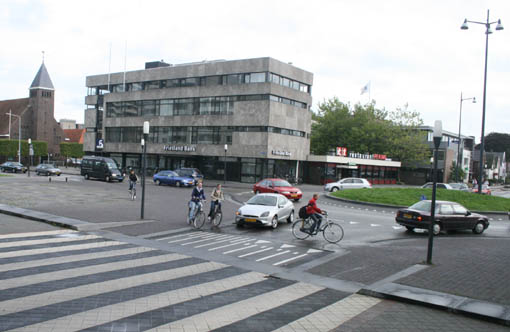
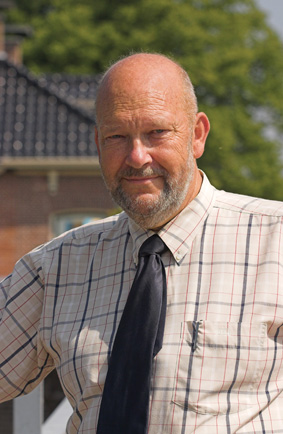 But for Hans Monderman, the late Dutch traffic engineer who pioneered the urban-planning concept known as “shared space,” the notion of the right of way as a categorical true-or-false proposition was about as rational as the divine right of kings. Monderman’s shared-space design philosophy is based on the principle that people who use the roads should rely on their own judgment to determine amongst themselves who has the right of way under the particular traffic conditions at any given moment. In this system, the regulatory powers to govern traffic are transferred from the state to the individual and the community at large. The people have to take responsibility for their decisions without simply trusting in traditional control mechanisms like lane markings and yield signs to do the work for them.
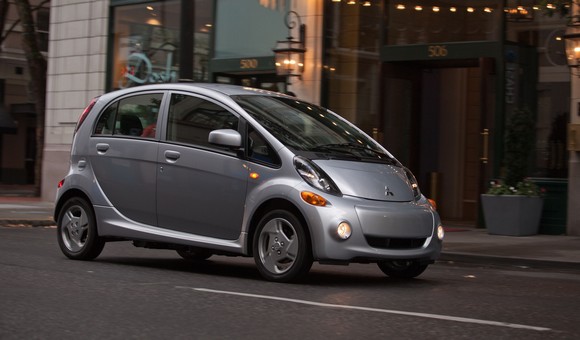 Vancouver, BC - The arrival of the 2012 North American spec i-MiEV (Mitsubishi Innovative Electric Vehicle) was celebrated in Vancouver with Shin Fujioka, President and CEO of Mitsubishi Motor Sales of Canada Inc. (MMSCAN).
 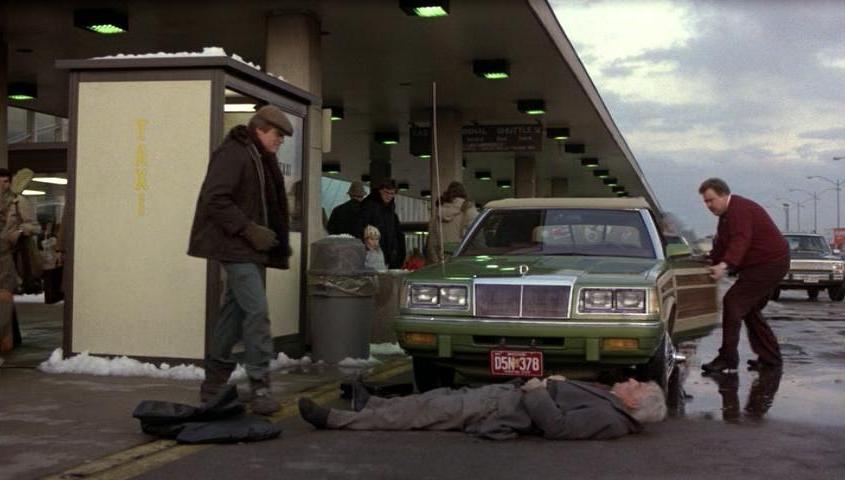 No matter what the destination or the vehicle that gets you there, there’s something almost mythic about the idea of the road trip. It seems like a kind of latter-day expression of the Spirit of the West, that quintessentially American impulse to break with custom and tradition and strike out for the frontier in search of new experiences. Of course, the open road can be a desolate place, lonely and maddeningly dull, but freeways aren’t freeways simply because there are no tolls. For me, the appeal of the road trip lies in its close association with a romantic ideal of freedom, maybe not the grand, capital-F variety (as in freedom from tyranny), but freedom from the problems, worries, and disappointments that can be like a permanent feature of our familiar environments. The road trip seems to promise that, by escaping our surroundings, we might also escape the rest of our lives, at least for a little while, until they catch up with us in Memphis, Chicago, Vancouver, or wherever else “the road takes us.” Which when you think about it is an apt way to describe the drawing power of the open road: we don’t take it the same way we take the car to the office or the kids to school, but it takes us, pulling us into its circuitry as if by some natural or vital force.
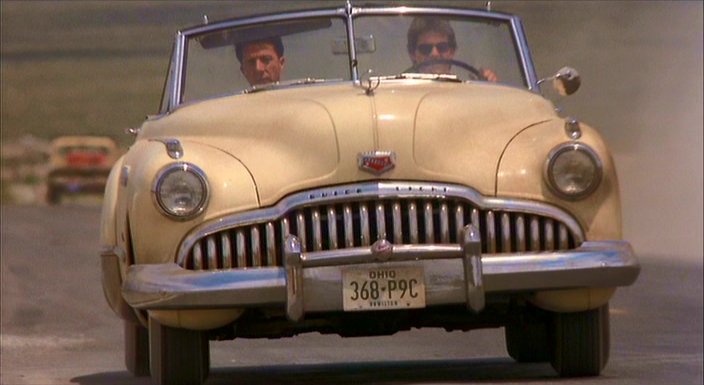 Rain Man (1988)
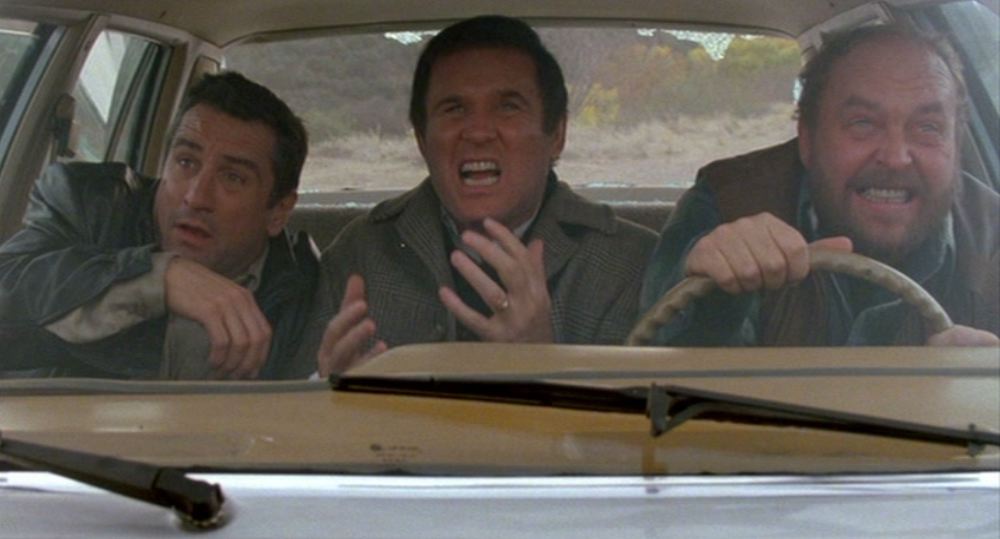 Midnight Run (1988)
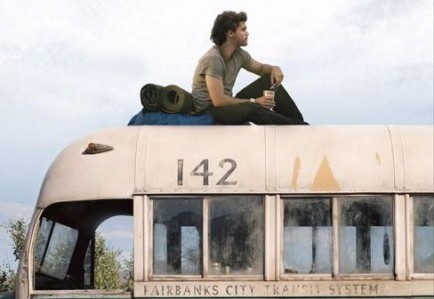 Into the Wild (2007)